Pintele Part 5: The Old Jewish Man of Unity

Transported to South Florida, I contend with racist bullies and kosher wine. A portal to an enchanted world opens, and I cavort through various promised lands with Mel Brooks and other 2,000-year-old men. We conclude with a drama entitled “Death in the Catskills.”
Listen now: Spotify | Apple Podcasts | Amazon Music Podcasts | YouTube | YouTube Music Podcasts | Pandora | iHeart Radio | Podbean | rss.com | Listen Notes | Podchaser | and more
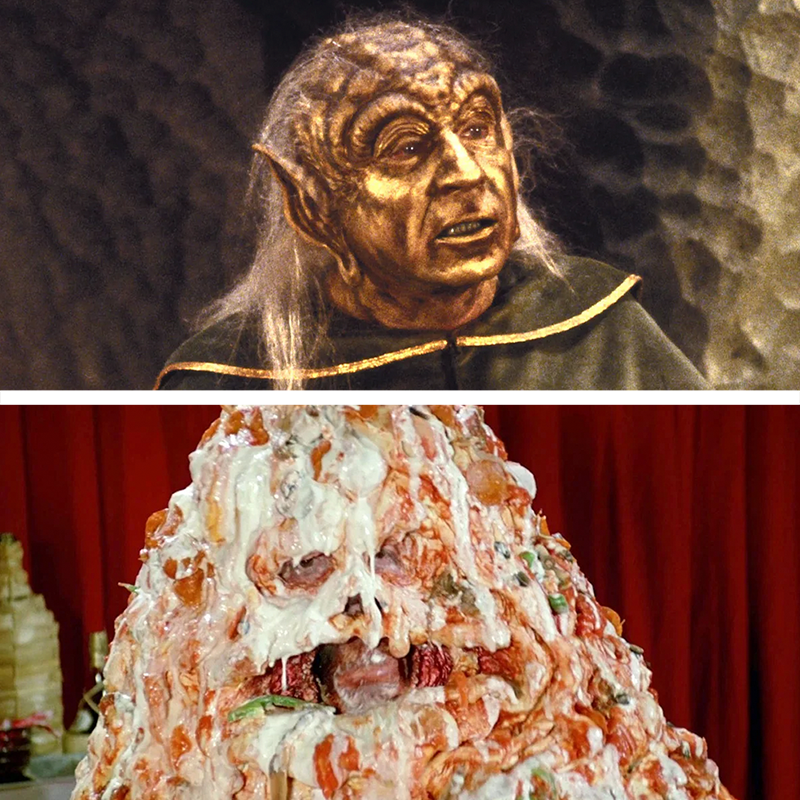
Once upon a time warp: Yogurt (Mel Brooks) and Pizza the Hut (voiced by Dom DeLuise) in Spaceballs (1987)
“If you can read this, you don’t need glasses!”
For the tale of another young man’s Spaceballs awakening, see “The Summer of Dark Helmet,” Brian Abrams, The Lowbrow Reader #10, 2017. Mel Brooks, who will turn 100 in June of 2026, has been in the news a lot lately. In December of 2025, shooting wrapped on the much-anticipated Spaceballs sequel; and directors Judd Apatow and Michael Bonfiglio recently released a fine two-part documentary, Mel Brooks: The 99 Year Old Man. As long as we’re in the neighborhood, if you’re not familiar with Brad Darrach’s 1975 Playboy interview with Brooks, ya velcome.
Treats from the Generation X time capsule: Free to Be ... You and Me, The Electric Company, You Can’t Do That On Television, and Garbage Pail Kids.
If you want to see the 1988 HBO televised version of Jackie Mason’s The World According to Me, you won’t have much trouble finding it on a website with a lot of videos.
You can see heartbreaking photos of the Nevele in ruins here. Plans to revitalize the site pop up frequently, but little has actually happened, other than some fires. The latest plan to rehabilitate the Nevele was announced just this month; fingers crossed. (Special thanks to Cheryl Rice, Poet Diva of Kingston, New York, for the news tip!)

Newspaper ads for VCRs, 1984
For more on the pointless cruelty of gym glass, see this recent piece by Trav S.D.
You can learn more about Avi Hoffman and Too Jewish? from the Yiddishkayt Initiative, of which Mr. Hoffman is a co-founder. I also recommend this oral history he recorded for the Yiddish Book Center.
You can learn more about Unity Church from unity.org. You can learn more about the Montessori method of education from the American Montessori Society.
For an altogether different personal narrative from the Unity period, see “Canned Goods in Washington.”
The speech delivered over Gershwin’s “Rhapsody in Blue,” with the multiple aborted “Chapter One” beginnings, references the opening monologue of Manhattan (1979), which uses the same music and the same “Chapter One” refrain. The inclusion of Groucho, Louis Armstrong, and “those incredible apples and pears by Cézanne” in a list of things that make life worth living is a reference to another speech later in the same film.
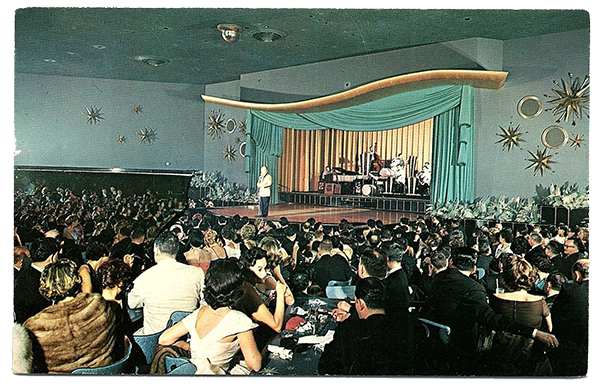
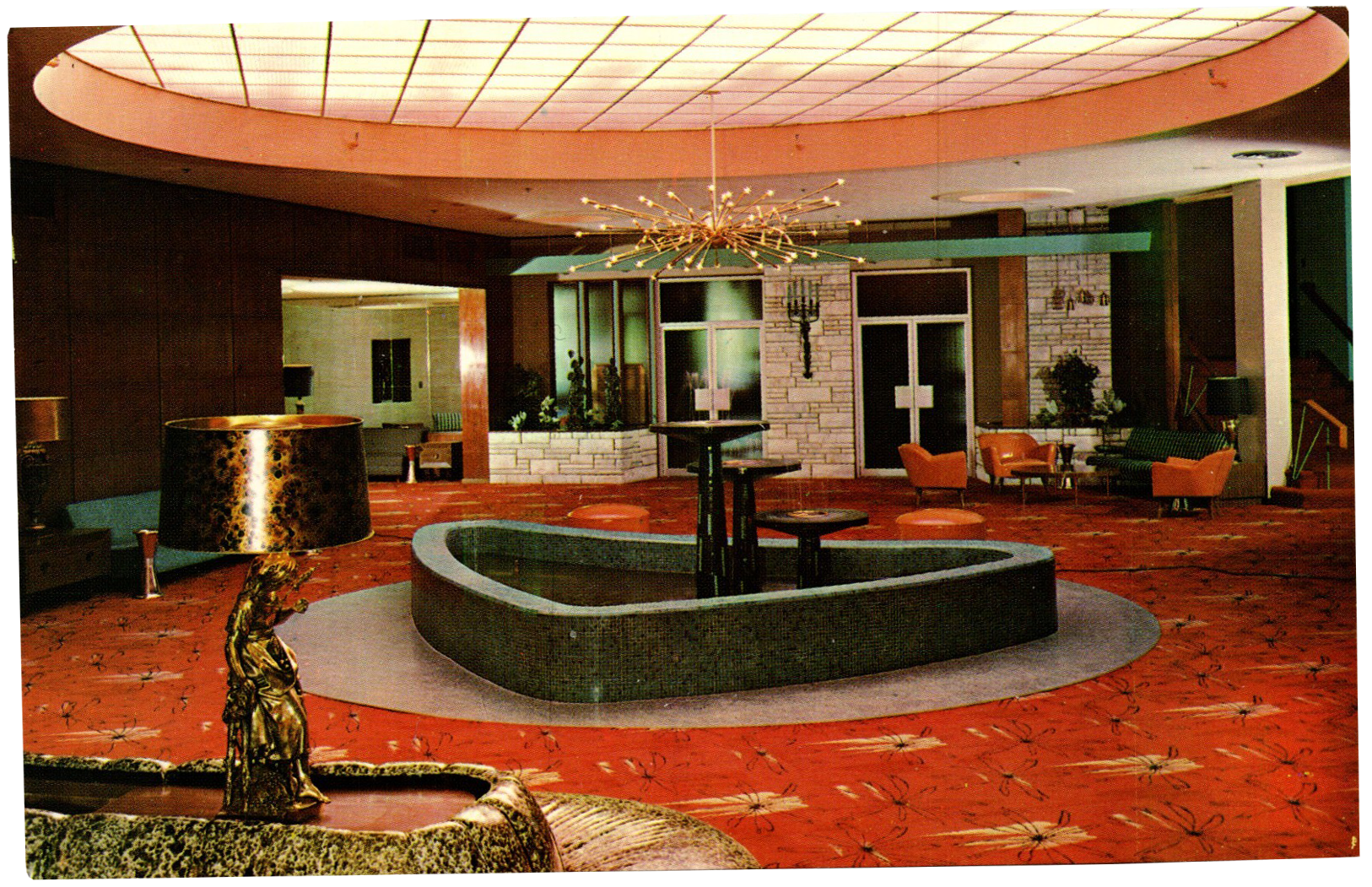
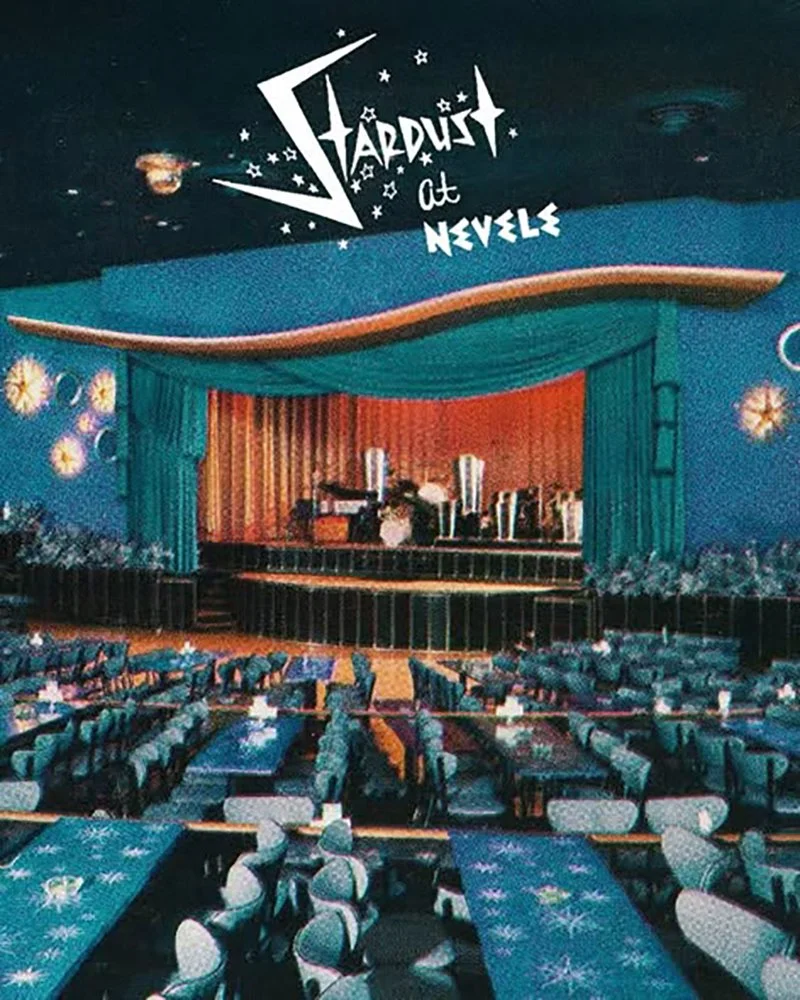
The Stardust Room at the Nevele
Attributions for the cacophony of Woody Allen lines are as follows: “His one regret in life is that he is not someone else” is from the author bio in Allen’s first three prose collections. Two signature quips about death, “I don’t want to achieve immortality through my work; I want to achieve it by not dying” and “I don’t mind dying. I just don’t want to be there when it happens,” are found in a plethora of sources between 1970 and 1980. “My grandfather, on his deathbed, sold me this watch,” “My mother...took an overdose of mahjong tiles,” and “The joke is on them, ‘cause it’s restricted!” can be found on the compilation album Woody Allen: Standup Comic. “Someone named Albert Shanker got ahold of an A-bomb”: Sleeper (1973). “I am pointing a gub at you”: Take the Money and Run (1969). “Don Francisco’s sister”: Love and Death (1975). “The horrible and the miserable”: Annie Hall (1977). “I gotta model myself after someone,” “You were so beautiful that I got another analyst!”: Manhattan (1979). “Particularly the early, funny ones”: Stardust Memories (1980). “He’s fictional, but you can’t have everything”: The Purple Rose of Cairo (1985). “Dog doesn’t return other dog’s phone calls” and “I love him like a brother — David Greenglass”: Crimes and Misdemeanors (1989). “I can’t make the leap of faith necessary to believe in my own existence”: Shadows and Fog (1991). “My taste is superb; my eyes are exquisite”: Bullets Over Broadway (1994). “I don’t mind throwing up into the wind”: Mighty Aphrodite (1995). “How the hell do I know why there were Nazis? I don’t know how the can opener works”: Hannah and Her Sisters (1986). “I think you’re the opposite of a paranoid; I think you go around with the insane delusion that people like you!”: Deconstructing Harry (1997). “I finally get the rock up to the top of the hill, and then what the hell do I have? A rock on a hill!”: Rifkin’s Festival (2022).
The remark about “transient oases in a vast desert of unspeakable gloom” is from this 2012 interview on NPR’s Fresh Air. The line “To be alive is to be happy” is spoken by the recently-deceased Richard (Bob Balaban) in Deconstructing Harry.
To address this as briefly as possible: The absence in Pintele of any reference to the discredited allegations against Woody Allen, or associated falsehoods, is deliberate. For the record, I strongly support the Me Too movement, a crucial corrective; and I support the “cancellations” of proven predators, including a prominent Jewish American, Harvey Weinstein; and my first comedy hero, Bill Cosby. The allegations against Woody Allen are not credible, and I don’t believe them. Instead, I believe the findings of the 1992-1993 formal investigations by the Child Sexual Abuse Clinic of Yale — New Haven Hospital and the New York State Department of Social Services. Anyone interested can find clarity in the writings of Moses Farrow, Robert B. Weide, Daphne Merkin, Wallace Shawn, and Patrick McGilligan. Allen tells his side of the story in Apropos of Nothing. See also New York Times, September 17, 2018. And more here. But your time would be much better spent unapologetically enjoying a Woody Allen movie.
On the subject of “self-hating Jews,” I strongly support the banishment of this phrase and concept from our thinking. The best rebuttal I’ve found comes from Tony Kushner, who was accused of “Jewish self-hatred” by a Chicago critic reviewing his musical Caroline, or Change in 2004. Kushner wrote:
In every religious or ethnic group, one finds irascible people who arrogate unto themselves the job of policing who is and who isn’t a good and loyal member of the community. Such people rarely contribute anything to the community other than pain, and always fail to understand that it is the heterogeneity of any community of people that gives it life. I am immensely proud of being Jewish…Nothing makes me prouder than hearing, as I often do, that my work is identified as Jewish-American literature. My anger at this critic and her editors for accusing me of hatred for the Jewish people — for my people — exceeds my abilities to express it.
Kushner’s statement is quoted in this article from My Jewish Learning, and the Chicago Reader.
“Death in the Catskills,” as explained, is historical fiction, roughly compatible with the two biographies it toys with; but with liberties. I’ll refrain from noting the many references in “Death in the Catskills,” but I hope you enjoyed them.
The song heard at the end of this chapter is “Hello, Schmendrik!” performed by Morris Goldstein. The song is from Joseph Rumshinsky’s 1921 Yiddish operetta Hello, Schmendrik! The Rumshinsky work, which appeared at the Second Avenue Theatre, was based on an Abraham Goldfaden comedy from 1877. According to Leo Rosten in The Joys of Yiddish, the Yiddish word schmendrik (as always, pick your favorite spelling) originated in Goldfaden’s play. It means “a pipsqueak; a no-account; the opposite of a mensch.” Rosten distinguishes between a schlemiel, who “can be physically impressive,” and a schmendrik, who “is small, short, weak, thin, a young nebech, perhaps an apprentice schlemiel.” One of the joys of Rosten’s lexicon is that he uses jokes to illustrate usage. The joke he uses to define schmendrik is:
A woman began to beat her schmendrik of a husband, who crawled under the bed. “Come out!” she cried. “No!” he said. “I’ll show you who’s boss in this house!”